Top Automated Irrigation Systems for Home and Commercial Gardens
Water management has become one of the most important aspects of modern gardening and agriculture. Whether you maintain a small backyard garden or manage a large commercial landscape, automated irrigation systems offer a practical solution for saving time, reducing water waste, and improving plant health. With increasing concerns about climate change, drought, and rising water costs, gardeners and commercial growers are turning to smart irrigation technology to achieve better efficiency and sustainability.
Automated irrigation systems are designed to deliver water directly to plants at the right time and in the correct amount. These systems eliminate the guesswork associated with manual watering and help create healthier lawns, gardens, flower beds, and agricultural spaces. Today’s advanced irrigation technologies include smart controllers, weather sensors, drip systems, and app-based monitoring tools that make watering more convenient than ever before.
This article explores the top automated irrigation systems for home and commercial gardens, their features, advantages, and how to choose the best option for your specific needs.
Why Automated Irrigation Systems Matter
Traditional watering methods often lead to overwatering or underwatering. Both problems can damage plants, waste resources, and increase maintenance costs. Automated irrigation systems solve these issues by providing consistent and controlled water distribution.
Some key benefits include:
- Reduced water consumption
- Lower utility bills
- Improved plant growth
- Time savings
- Better soil moisture management
- Reduced weed growth
- Enhanced convenience
For commercial gardens and landscaping businesses, automation also improves labor efficiency and allows large areas to be maintained with minimal manual intervention.
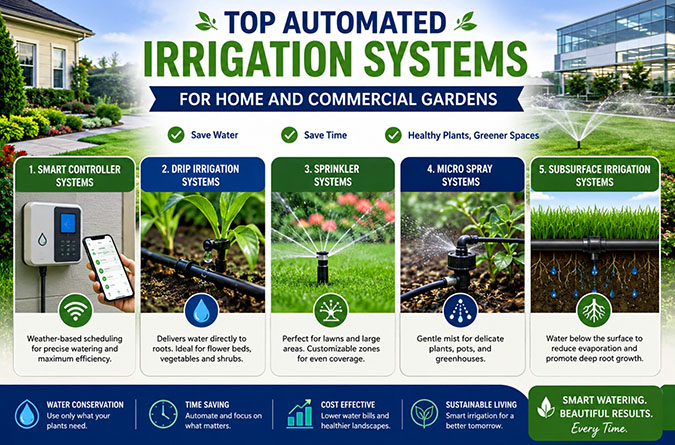
Drip Irrigation Systems
Drip irrigation is one of the most efficient watering methods available today. This system slowly delivers water directly to the root zone of plants through tubes, emitters, and drip lines.
Advantages of Drip Irrigation
Drip systems are highly popular for both home gardens and commercial farming because they minimize evaporation and runoff. Water reaches the soil slowly, allowing plants to absorb moisture more effectively.
Other benefits include:
- Precise water delivery
- Reduced fungal diseases
- Less water waste
- Compatibility with fertilizers
- Excellent for vegetable gardens and flower beds
Best Applications
Drip irrigation works best for:
- Raised garden beds
- Greenhouses
- Orchards
- Vineyards
- Residential landscaping
- Commercial vegetable farms
Many smart drip systems now include programmable timers and smartphone connectivity, allowing users to customize watering schedules remotely.
Smart Sprinkler Systems
Smart sprinkler systems have become increasingly popular for lawns, parks, golf courses, and commercial landscapes. Unlike traditional sprinklers, smart systems use weather data and soil sensors to determine optimal watering schedules.
Features of Smart Sprinklers
Modern smart sprinkler systems often include:
- Wi-Fi connectivity
- Mobile app control
- Weather-based adjustments
- Leak detection
- Zone-specific watering
- Voice assistant compatibility
These systems can automatically skip watering during rainy conditions and increase irrigation during dry periods.
Benefits for Homeowners
Homeowners appreciate smart sprinklers because they simplify lawn care while reducing water bills. The ability to control watering schedules from a smartphone adds convenience and flexibility.
Benefits for Commercial Landscapes
For commercial properties, smart sprinklers provide centralized management for multiple zones and large landscapes. Property managers can monitor water usage, detect issues quickly, and maintain healthier green spaces with less effort.
Soaker Hose Irrigation Systems
Soaker hoses are an affordable and simple irrigation solution for smaller gardens. These porous hoses slowly release water directly into the soil along their entire length.
Why Soaker Hoses Are Popular
Soaker hoses are easy to install and ideal for gardeners who want a low-cost automated solution. When connected to a timer, they provide consistent watering without requiring manual supervision.
Ideal Uses
Soaker hoses work well for:
- Flower beds
- Shrub borders
- Small vegetable gardens
- Foundation plantings
Although they are less advanced than smart irrigation systems, they remain highly effective for many residential applications.
Underground Irrigation Systems
Underground irrigation systems are commonly used in residential lawns, sports fields, and commercial landscapes. Pipes are buried below the surface, while pop-up sprinkler heads distribute water evenly.
Key Advantages
One major advantage is aesthetics. Since the system is hidden underground, it maintains a clean and professional appearance.
Additional benefits include:
- Even water distribution
- Reduced tripping hazards
- Durable installation
- Minimal visual impact
- Automated scheduling options
Commercial Applications
Commercial properties such as hotels, resorts, office complexes, and public parks frequently use underground systems because they can efficiently irrigate large areas with minimal maintenance.
Smart Controllers and Irrigation Timers
A modern irrigation system is only as effective as its controller. Smart controllers act as the brain of automated watering systems.
What Smart Controllers Do
Smart controllers analyze data from:
- Weather forecasts
- Soil moisture sensors
- Temperature readings
- Historical watering patterns
Based on this information, they adjust watering schedules automatically.
Benefits of Smart Controllers
Using a smart controller can significantly reduce water usage while improving plant health. Many homeowners and commercial landscapers report water savings of up to 30% after switching to weather-based irrigation control systems.
Hydroponic Automated Irrigation Systems
Hydroponic systems are becoming increasingly popular in commercial agriculture and urban gardening. These systems grow plants without soil, using nutrient-rich water solutions instead.
Automation in Hydroponics
Automated hydroponic irrigation systems regulate:
- Nutrient delivery
- Water circulation
- pH levels
- Oxygen supply
- Moisture control
Automation helps growers achieve faster plant growth and higher yields while minimizing labor requirements.
Commercial Benefits
Commercial hydroponic farms benefit from year-round production, reduced water consumption, and efficient space utilization. Automated controls also make it easier to maintain precise growing conditions.
Solar-Powered Irrigation Systems
Sustainability has become a major focus in modern agriculture and landscaping. Solar-powered irrigation systems offer an environmentally friendly solution by using renewable energy to operate pumps and controllers.
Advantages of Solar Irrigation
Solar irrigation systems provide several benefits:
- Lower electricity costs
- Eco-friendly operation
- Reduced carbon footprint
- Ideal for remote locations
- Reliable off-grid performance
Best Uses
These systems are particularly useful for:
- Remote farms
- Rural gardens
- Sustainable landscaping projects
- Eco-conscious homeowners
As solar technology becomes more affordable, adoption rates continue to rise worldwide.
Choosing the Right Irrigation System
Selecting the best automated irrigation system depends on several important factors.
Garden Size
Small residential gardens may only require drip irrigation or soaker hoses, while large commercial landscapes often need underground sprinkler systems with advanced controllers.
Plant Types
Different plants have different watering needs. Vegetables, lawns, flowers, and trees may require separate irrigation zones for optimal performance.
Climate Conditions
Hot and dry climates benefit greatly from moisture sensors and weather-responsive controllers that prevent overwatering.
Budget
Simple timer-based systems are relatively affordable, while fully integrated smart irrigation setups may require larger investments upfront. However, the long-term savings in water and labor often justify the cost.
Maintenance Requirements
Some systems require more maintenance than others. Drip emitters may need periodic cleaning, while underground systems may require seasonal inspections.
Common Mistakes to Avoid
Even the best irrigation system can become inefficient if poorly designed or maintained.
Overwatering
Many users assume more water leads to healthier plants. In reality, overwatering can damage roots and encourage disease.
Poor Zoning
Combining plants with different water needs into the same irrigation zone often causes inconsistent growth.
Ignoring Maintenance
Regular inspections help prevent clogged emitters, leaks, and malfunctioning sensors.
Incorrect Scheduling
Watering during the hottest part of the day increases evaporation. Early morning watering is usually the most effective schedule.
Future Trends in Automated Irrigation
The future of irrigation technology is becoming increasingly intelligent and sustainable. Artificial intelligence, machine learning, and Internet of Things (IoT) technologies are transforming how gardens and farms are managed.
Emerging trends include:
- AI-powered irrigation analytics
- Fully autonomous watering systems
- Advanced soil monitoring
- Drone-assisted irrigation mapping
- Real-time mobile notifications
- Integration with smart home ecosystems
These innovations are expected to further reduce water waste while maximizing agricultural productivity.
Conclusion
Automated irrigation systems are revolutionizing the way homeowners, landscapers, and commercial growers manage water resources. From simple soaker hoses to advanced smart sprinkler networks, modern irrigation technology offers efficient, reliable, and environmentally friendly solutions for gardens of all sizes.
Choosing the right system depends on your landscape size, plant requirements, climate, and budget. Drip irrigation remains one of the most water-efficient options, while smart sprinkler systems provide excellent convenience for larger properties. Hydroponic and solar-powered systems are also gaining popularity due to their sustainability and technological advantages.
As water conservation becomes increasingly important worldwide, automated irrigation systems will continue to play a crucial role in maintaining healthy gardens while reducing environmental impact. Investing in the right irrigation solution today can save time, money, and resources for years to come.