20 Smart Gardening Systems That Save Water and Increase Crop Yields
Water conservation has become one of the biggest challenges in modern agriculture and home gardening. Climate change, rising temperatures, and growing populations are putting enormous pressure on freshwater resources worldwide. At the same time, gardeners and farmers still need to produce healthy, abundant crops to meet increasing food demands. Fortunately, smart gardening systems are transforming the way people grow plants by combining technology, automation, and sustainable practices.
These advanced systems help reduce water waste, improve soil conditions, and maximize crop productivity. Whether you are managing a backyard vegetable garden, a greenhouse, or a commercial farm, smart gardening tools can significantly increase efficiency while lowering costs. Below are 20 innovative smart gardening systems that save water and boost crop yields.
1. Drip Irrigation Systems
Drip irrigation is one of the most efficient watering methods available today. Instead of spraying water across large areas, it delivers water directly to the roots of plants through small tubes and emitters. This reduces evaporation and prevents unnecessary runoff.
Drip irrigation can save up to 70% more water compared to traditional sprinklers while encouraging healthier root growth and better crop production.
2. Smart Soil Moisture Sensors
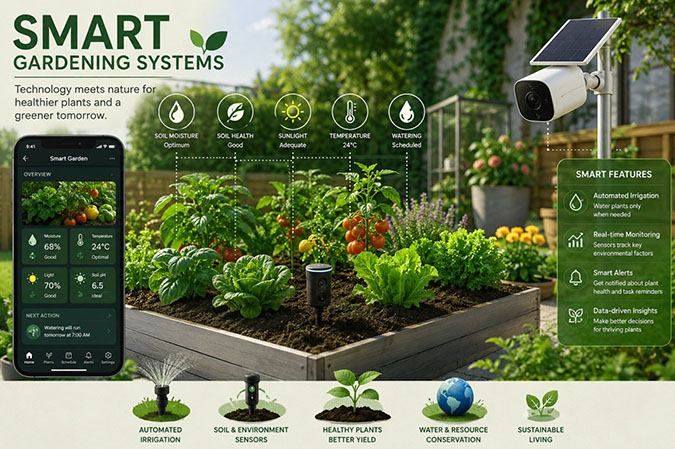
Soil moisture sensors monitor the amount of water in the soil and provide real-time data to gardeners. These sensors help determine exactly when plants need watering, preventing overwatering and underwatering.
Many modern systems connect to mobile apps, allowing users to monitor soil conditions remotely and automate irrigation schedules for maximum efficiency.
3. Automated Irrigation Controllers
Smart irrigation controllers use weather data, soil conditions, and plant requirements to manage watering schedules automatically. These systems adjust irrigation based on rainfall, humidity, and temperature.
By preventing unnecessary watering during rainy periods, automated controllers conserve water while ensuring crops receive consistent hydration.
4. Hydroponic Gardening Systems
Hydroponics allows plants to grow without soil using nutrient-rich water solutions. Because the water is continuously recycled within the system, hydroponics uses far less water than conventional farming methods.
Hydroponic gardens also promote faster plant growth, higher yields, and cleaner produce because nutrients are delivered directly to the roots.
5. Aeroponic Growing Systems
Aeroponics is a highly advanced gardening method where plant roots are suspended in the air and misted with nutrient solutions. This system uses extremely small amounts of water while providing excellent oxygen exposure to the roots.
Aeroponic systems are ideal for growing leafy vegetables, herbs, and strawberries with impressive productivity.
6. Rainwater Harvesting Systems
Rainwater harvesting collects and stores rainwater for future garden use. These systems typically include gutters, filters, and storage tanks connected to irrigation systems.
Using harvested rainwater reduces dependence on municipal water supplies and lowers water bills while supporting sustainable gardening practices.
7. Smart Greenhouses
Modern smart greenhouses use sensors, automation, and climate-control technologies to create ideal growing environments. These systems monitor humidity, light levels, soil moisture, and temperature.
Automated ventilation, watering, and shading systems optimize plant growth while minimizing water consumption and energy waste.
8. Self-Watering Raised Beds
Self-watering raised beds contain built-in water reservoirs beneath the soil surface. Plants draw moisture upward through capillary action, ensuring consistent hydration.
This system minimizes evaporation, reduces daily maintenance, and helps plants thrive even during hot weather conditions.
9. Vertical Gardening Systems
Vertical gardens maximize growing space by stacking plants upward instead of spreading them across the ground. Many vertical systems incorporate drip irrigation and water recirculation technologies.
Because water flows efficiently through multiple layers, vertical gardens reduce waste while increasing productivity in small spaces.
10. Smart Sprinkler Systems
Unlike traditional sprinklers, smart sprinkler systems use weather forecasting and soil data to apply water only when needed. Some systems even detect wind speed to avoid overspray.
These intelligent systems help homeowners and farmers save significant amounts of water without sacrificing crop health.
11. Aquaponic Farming Systems
Aquaponics combines hydroponics with fish farming in a closed-loop ecosystem. Fish waste provides natural nutrients for plants, while plants help filter and clean the water for the fish.
This sustainable method dramatically reduces water usage because the same water continuously circulates throughout the system.
12. Mulching Technologies
Mulching is a simple but highly effective water-saving strategy. Organic or synthetic mulch covers the soil surface, reducing evaporation and maintaining consistent soil moisture.
Smart mulching materials can also regulate soil temperature, suppress weeds, and improve soil quality over time.
13. Solar-Powered Irrigation Systems
Solar-powered irrigation systems use renewable energy to operate pumps and watering equipment. These systems are especially useful in remote agricultural areas where electricity access is limited.
By combining solar energy with efficient watering methods, gardeners can reduce operating costs and environmental impact.
14. IoT-Based Garden Monitoring
Internet of Things (IoT) technology allows gardeners to connect multiple devices and sensors into one integrated monitoring system. Data from moisture sensors, weather stations, and irrigation systems can be accessed through smartphones or computers.
IoT gardening provides precise control over water usage and environmental conditions, resulting in healthier crops and improved yields.
15. Smart Composting Systems
Healthy soil retains moisture more effectively, and smart composting systems help create nutrient-rich organic matter faster and more efficiently. Some advanced composters monitor temperature, oxygen levels, and moisture automatically.
Improved soil structure helps plants absorb water more efficiently, reducing irrigation needs while boosting crop growth.
16. Wicking Bed Systems
Wicking beds are self-irrigating garden beds that store water in a reservoir beneath the soil. Water rises naturally into the root zone through capillary action.
These systems are extremely water-efficient because moisture is delivered directly to plant roots with minimal evaporation loss.
17. Fogging and Mist Irrigation Systems
Mist irrigation systems release ultra-fine water droplets that hydrate plants without flooding the soil. These systems are particularly useful in greenhouses and for delicate crops.
Because they use tiny amounts of water, fogging systems can maintain humidity and moisture efficiently while conserving resources.
18. AI-Powered Farming Systems
Artificial intelligence is revolutionizing agriculture by analyzing data from sensors, drones, and weather reports. AI systems can predict plant water requirements, detect disease risks, and optimize irrigation timing.
This precision agriculture approach helps maximize yields while minimizing water waste and fertilizer use.
19. Smart Water Recycling Systems
Water recycling systems collect runoff and unused irrigation water for filtration and reuse. Some advanced systems even treat household greywater for safe garden irrigation.
Recycling water reduces overall consumption and supports long-term sustainability, especially in drought-prone regions.
20. Precision Agriculture Drones
Agricultural drones equipped with thermal cameras and moisture sensors help monitor crop conditions from above. These drones can identify dry areas, plant stress, and irrigation problems quickly.
By targeting water applications only where needed, drones improve efficiency and help farmers increase crop yields with fewer resources.
Benefits of Smart Gardening Systems
Smart gardening systems offer many advantages beyond water conservation. One major benefit is increased productivity. Plants receive consistent care and ideal growing conditions, which leads to faster growth and larger harvests.
Another important advantage is reduced labor. Automation handles tasks such as watering, climate control, and nutrient management, saving gardeners time and effort.
Smart systems also improve sustainability by reducing water waste, lowering chemical usage, and supporting environmentally friendly farming practices. Many technologies can even reduce operational costs over time through lower water and energy bills.
Choosing the Right Smart Gardening System
The best smart gardening system depends on your available space, budget, climate, and gardening goals. Small home gardeners may benefit from self-watering beds, drip irrigation, or vertical gardens. Larger farms may require AI-powered irrigation, drones, or smart greenhouse systems.
Beginners should start with simple technologies like soil moisture sensors or automated irrigation timers before moving into more advanced systems. Over time, combining multiple technologies can create a highly efficient and productive gardening environment.
The Future of Water-Efficient Gardening
As technology continues to evolve, smart gardening systems will become even more advanced and accessible. Future innovations may include fully autonomous farms, robotic harvesting systems, and AI-driven climate management.
Water scarcity will remain a global concern, making efficient gardening technologies essential for sustainable food production. By adopting smart gardening solutions today, gardeners and farmers can protect valuable resources while producing healthier and more abundant crops for the future.
Smart gardening is no longer just a trend—it is becoming the foundation of modern agriculture. With the right systems in place, anyone can grow more food using less water while contributing to a greener and more sustainable world.