Vertical Farming vs Traditional Farming: Which Is More Profitable?
Agriculture has always been the backbone of human civilization, but modern technology is transforming how food is produced. One of the most talked-about innovations in recent years is vertical farming, a system where crops are grown in stacked layers inside controlled indoor environments. At the same time, traditional farming continues to dominate global food production through open-field cultivation using natural sunlight and soil.
The debate between vertical farming and traditional farming is no longer only about sustainability or innovation. Investors, entrepreneurs, and farmers now want to know which method is more profitable. The answer depends on several factors, including startup costs, crop selection, energy consumption, labor efficiency, land availability, and market demand.
Understanding the strengths and weaknesses of both systems is essential for determining which farming model delivers better financial returns in the long run.
What Is Vertical Farming?
Vertical farming is an indoor agricultural system that uses stacked shelves or towers to grow crops. These farms often rely on technologies such as hydroponics, aeroponics, LED lighting, climate control systems, and automation.
Unlike traditional agriculture, vertical farming does not depend on weather conditions or large plots of land. Crops are cultivated year-round in warehouses, shipping containers, or specially designed buildings.
Popular crops grown in vertical farms include:
- Lettuce
- Spinach
- Kale
- Herbs
- Strawberries
- Microgreens
The primary goal of vertical farming is to maximize production in limited spaces while reducing water usage and transportation costs.
What Is Traditional Farming?
Traditional farming refers to conventional agricultural methods where crops are grown in soil under natural environmental conditions. Farmers rely on sunlight, rainfall, seasonal cycles, and large areas of land.
This system has been practiced for thousands of years and remains the dominant source of global food production. Traditional farms grow a wide variety of crops, including grains, fruits, vegetables, and livestock feed.
Key examples include:
- Rice fields
- Corn farms
- Wheat plantations
- Vegetable gardens
- Fruit orchards
Traditional farming benefits from lower technology costs and the ability to scale over massive areas of land.
Startup Costs Comparison
One of the biggest differences between vertical farming and traditional farming is the initial investment required.
Vertical Farming Costs
Vertical farms are expensive to build because they require advanced infrastructure and technology. Startup expenses typically include:
- LED grow lights
- Climate control systems
- Irrigation equipment
- Sensors and automation
- Indoor facilities
- Backup power systems
A commercial vertical farm can cost hundreds of thousands or even millions of dollars before producing its first harvest.
The high cost creates a significant barrier for small farmers or startups with limited capital. Investors must wait longer before seeing returns on investment.
Traditional Farming Costs
Traditional farming generally requires lower upfront technology investments. Major expenses usually include:
- Land purchase or rental
- Tractors and machinery
- Seeds and fertilizers
- Irrigation systems
- Labor costs
Although farmland can be expensive in some regions, traditional farming still tends to have lower startup costs than large-scale vertical farms.
For many farmers, this makes traditional agriculture financially accessible and easier to expand gradually over time.
Operating Expenses and Efficiency
Profitability is not determined only by startup costs. Daily operating expenses play a major role in long-term success.
Energy Consumption in Vertical Farming
One of the biggest challenges facing vertical farming is electricity usage. Artificial lighting and climate control systems consume enormous amounts of energy.
LED lights must operate for many hours each day to replace sunlight. Cooling and ventilation systems also run continuously to maintain ideal growing conditions.
As energy prices rise, operating costs can significantly reduce profit margins.
However, some vertical farms offset these expenses by using renewable energy sources such as solar panels or wind power.
Resource Efficiency
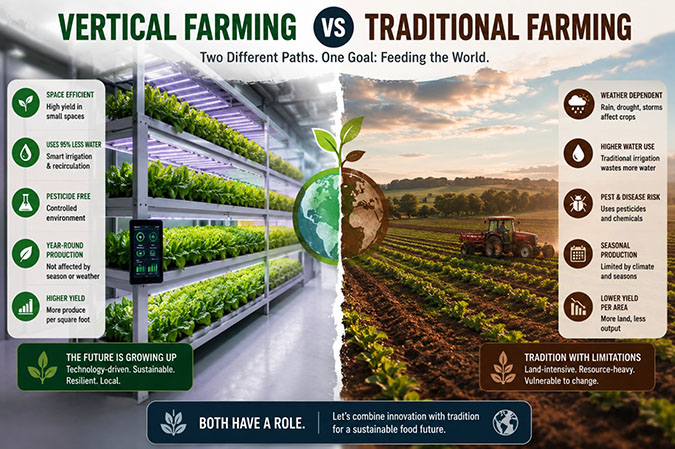
Despite higher electricity costs, vertical farming is extremely efficient in other areas.
Benefits include:
- Up to 95% less water usage
- Reduced pesticide requirements
- Minimal land consumption
- Lower transportation costs in urban areas
- Less crop loss from weather events
This efficiency can improve profitability, especially in regions facing water shortages or limited farmland.
Traditional Farming Operating Costs
Traditional farming relies heavily on fuel, fertilizers, pesticides, and irrigation. Weather-related problems such as droughts, floods, pests, and storms can destroy crops and reduce income.
Farmers may also experience fluctuating yields due to changing climate conditions.
However, traditional farms benefit from free natural sunlight and lower electricity dependence, helping reduce energy expenses compared to indoor systems.
Crop Yield and Production Capacity
Yield per square foot is another important factor when evaluating profitability.
Vertical Farming Yields
Vertical farming can produce extremely high yields because crops are stacked vertically and grown year-round.
For example, a vertical farm may harvest lettuce multiple times each month without seasonal interruptions. Controlled environments also allow farmers to optimize temperature, humidity, and nutrient delivery for faster plant growth.
This means vertical farms can generate more produce per square meter than traditional farms.
In urban areas where land is expensive, this high-density production model becomes financially attractive.
Traditional Farming Yields
Traditional farms require much larger areas of land to achieve similar production volumes. Seasonal limitations also affect harvest frequency.
However, traditional farming remains superior for growing staple crops such as:
- Wheat
- Corn
- Soybeans
- Rice
These crops are difficult and expensive to grow profitably indoors because they require vast amounts of space and lower market prices.
As a result, traditional farming dominates global food supply chains for bulk agricultural commodities.
Market Demand and Consumer Preferences
Consumer behavior strongly influences agricultural profitability.
Demand for Locally Grown Produce
Urban consumers increasingly prefer fresh, pesticide-free, locally grown vegetables. Vertical farms can deliver produce directly to nearby supermarkets and restaurants, reducing transportation time.
This creates opportunities for premium pricing.
Many customers are willing to pay more for:
- Organic produce
- Sustainable farming practices
- Fresh local vegetables
- Environmentally friendly food production
Vertical farms often target these high-value niche markets.
Traditional Farming’s Market Strength
Traditional farms benefit from large-scale production and established distribution systems. They can supply supermarkets, exporters, food manufacturers, and global commodity markets at lower prices.
Because traditional farming operates on a larger scale, it often achieves better economies of scale for staple crops.
This makes traditional farming more profitable in mass-market agriculture.
Labor and Automation
Labor availability and wages also affect profitability.
Automation in Vertical Farming
Many vertical farms use automation technologies such as robotic harvesting, AI monitoring systems, and automated irrigation.
Automation reduces labor dependency and increases operational consistency.
Although automation systems are expensive initially, they may lower long-term labor costs.
Traditional Farming Labor Challenges
Traditional farming often requires seasonal workers for planting, harvesting, and maintenance.
Labor shortages and rising wages can increase operational costs, especially in countries with aging farming populations.
Mechanized farming helps improve efficiency, but many crops still require manual labor.
Environmental and Financial Risks
Profitability is closely tied to risk management.
Risks in Vertical Farming
Vertical farming faces several financial risks:
- High electricity prices
- Expensive equipment maintenance
- Technology failures
- Limited crop variety
- High debt financing
If energy costs increase significantly, profitability may decline rapidly.
Risks in Traditional Farming
Traditional farming faces environmental risks such as:
- Climate change
- Droughts
- Floods
- Soil degradation
- Pest outbreaks
Extreme weather events can wipe out entire harvests, causing major financial losses.
Insurance can help, but unpredictable climate conditions remain a serious concern for farmers worldwide.
Which Farming Method Is More Profitable?
The profitability of vertical farming versus traditional farming depends largely on business goals and crop selection.
Vertical Farming Is More Profitable When:
- Land is expensive or limited
- Water scarcity is severe
- Urban markets demand fresh produce
- High-value leafy greens are grown
- Technology and energy costs are manageable
Vertical farming works especially well in densely populated cities where fresh produce can be sold at premium prices.
Traditional Farming Is More Profitable When:
- Large-scale staple crops are produced
- Land is affordable and abundant
- Natural climate conditions are favorable
- Energy costs are high
- Existing agricultural infrastructure is strong
Traditional farming remains the most cost-effective option for feeding large populations globally.
The Future of Farming Profitability
Rather than replacing traditional farming completely, vertical farming is likely to complement it. Each system serves different agricultural needs and market segments.
Future innovations may improve the profitability of vertical farming through:
- More efficient LED lighting
- Renewable energy integration
- AI-powered crop management
- Improved automation
- Better crop genetics
At the same time, traditional farming is evolving with precision agriculture, smart irrigation systems, and sustainable soil management techniques.
The future of agriculture may involve hybrid systems where indoor farms produce fresh vegetables near cities while traditional farms continue supplying grains and large-scale commodities.
Conclusion
Vertical farming and traditional farming each offer unique financial advantages and challenges. Vertical farming provides high yields, water efficiency, and year-round production, making it attractive for urban food systems and premium produce markets. However, its high startup and energy costs can limit profitability.
Traditional farming remains more practical and profitable for large-scale staple crop production due to lower energy dependence and established infrastructure. Yet it faces growing risks from climate change and environmental pressures.
Ultimately, the more profitable option depends on location, crop type, energy availability, consumer demand, and investment strategy. As technology continues to evolve, both farming systems will likely play essential roles in shaping the future of global food production.